Our coffee
Proper coffee, prepared properly
The horsebox may be the first thing people notice, but the coffee is the reason Gallop & Grind exists.
The beans
Roasted in Cirencester, bought often
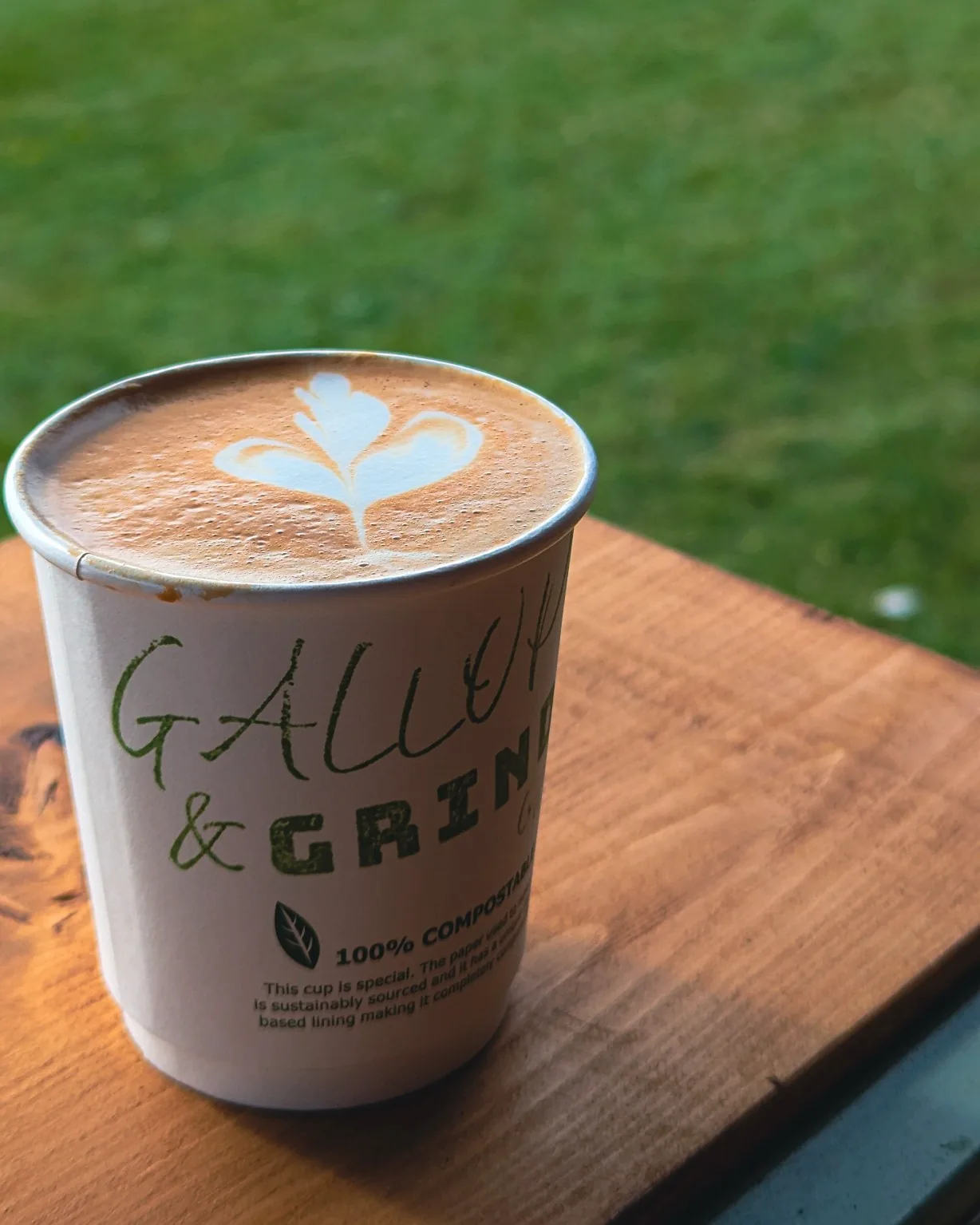
Our beans come from Fire & Flow, a speciality roaster based in Cirencester — about an hour up the road from us. Buying locally rather than from a national supplier keeps the coffee fresh and the conversation short: if a batch is not right, we can say so to the people who roasted it.
The espresso is bought in small, regular quantities so it is used close to roast rather than sitting in the horsebox for months. Fire & Flow also back their wholesale customers with barista training and technical support, which is part of why we serve the same coffee at every event.
- Who roasts for us
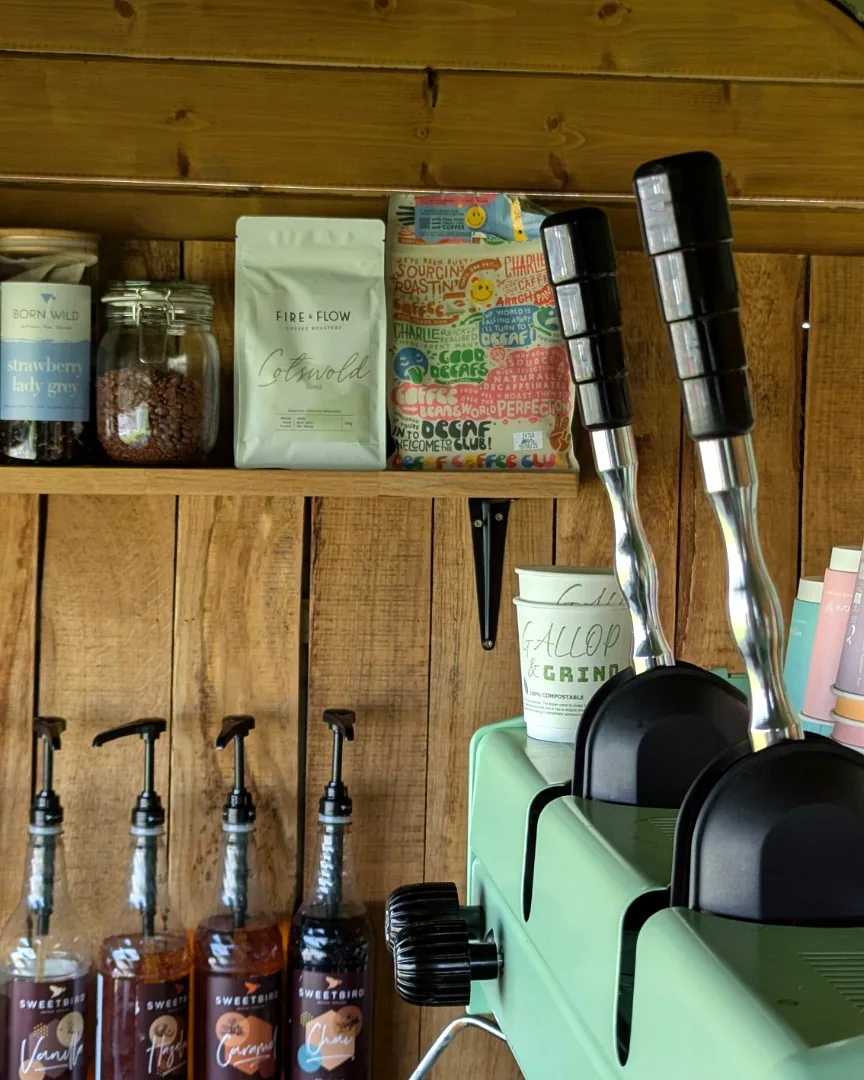
- Fire & Flow, a speciality coffee roaster in Cirencester, Gloucestershire. They roast to order for cafés, hotels and offices across the region, and they source selectively — working with producers who pay a fair wage and farm sustainably. Beans reach us close to roast rather than after a spell in a warehouse.
- House espresso — Cotswold Blend
- Our house espresso is the Cotswold Blend: a naturally processed Brazilian coffee from Ibiraci in southern Minas Gerais, blended with a washed coffee from Kalungu in the Democratic Republic of the Congo. It is the base for every milk drink we serve.
- Origin
- Brazil (Ibiraci, Minas Gerais) and the Democratic Republic of the Congo (Kalungu, near Lake Kivu). The Kalungu washing station serves around 380 smallholder farmers, 44% of them women, and processes for the CAPCKI 'coffee for peace' cooperative.
- Tasting notes
- Milk chocolate, maple and nuts. Sweet and rounded rather than sharp, which is why it holds up so well in a flat white.
- Process
- Natural (Brazil) and washed (DRC).
- Decaf — The Original One
- Decaf is always on board and treated as a proper drink, not an afterthought. It is prepared on the same machine, to the same recipe standard, as everything else we serve. Tasting notes: chocolate brownie and caramel.
- Decaf origin and process
- A single-estate Mexican coffee from La Laja, a farm near Huatusco in Veracruz, owned by the Sampieri family for three generations and certified by Rainforest Alliance and 4C. It is decaffeinated by the Mountain Water Process — a non-chemical, organic-certified method using glacial water from Pico de Orizaba — which keeps far more of the flavour and body than solvent methods.
The machine
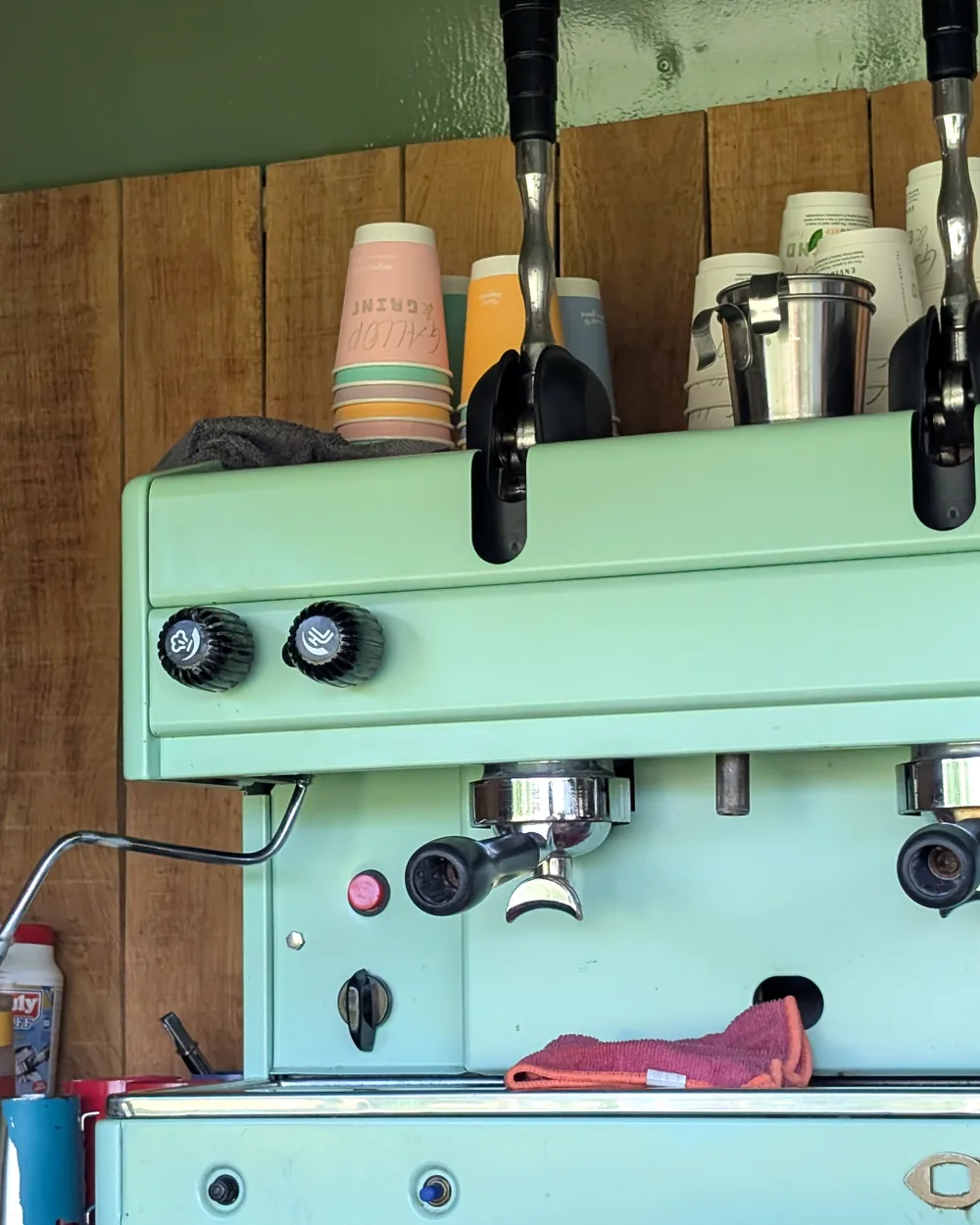
The Astoria lever machine
Our restored Astoria is not a prop. It is the working heart of the horsebox.
It is commercial equipment, restored to work rather than to be looked at, and it is plumbed into the horsebox's own water and power so it runs the same way in a field as it would in a cafe.
- Commercial equipment
- A commercial machine, not a domestic one. That matters mainly for recovery: it can keep making the same drink through a rush rather than falling behind after the first dozen.
- Lever operation
- The shot is pulled by hand. The barista controls when it starts and when it stops, judging the pour by eye rather than pressing a button and walking away.
- Espresso preparation
- Every drink starts with a shot made to order — ground, dosed, tamped and pulled for that cup. Nothing is brewed in advance and held.
- Why it supports quality
- Because the barista is involved in every shot, problems are noticed in the cup and corrected on the spot. That is the argument for a lever machine at an event: attention, not automation.
Preparation
Between the bag and the cup
Good beans and a good machine still need someone paying attention. This is what happens between the bag and the cup.
- Grinding
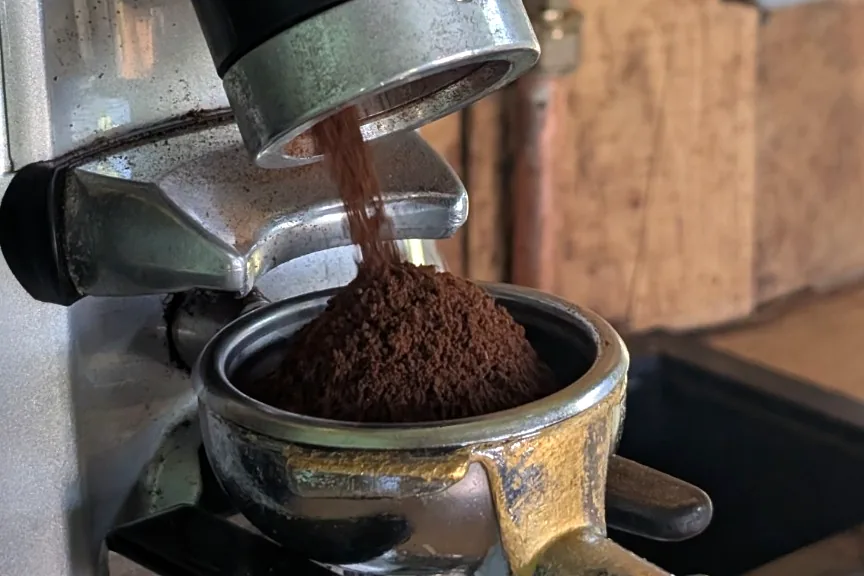
- Beans are ground to order rather than pre-ground, and the grind is adjusted through the day as conditions change. Cold mornings and warm afternoons do not want the same setting.
- Espresso extraction
- Shots are pulled to a target and tasted, not timed and forgotten. If the coffee is running fast or slow, the grind is corrected before the next drink goes out.
- Milk texturing
- Milk is textured per drink, to the texture the drink calls for — a flat white and a cappuccino are not the same pour. Milk is never re-steamed.
- Recipe consistency
- The point of a recipe is that the last drink of the day matches the first. We work to a set recipe so the coffee is the same at four o'clock as it was at nine.
- Espresso recipe
- 18 g of coffee in, tamped with 15 lbs of pressure using an automatic tamper, 5 seconds of pre-infusion, then 25 seconds of extraction. The recipe is the same at the start of service as at the end.
- Barista skill
- The service is run by trained baristas who make coffee for a living, not staff handed a machine on the morning of the event.
- Adjusting during service
- At a peak we manage the queue by sequencing drinks sensibly and being honest about the wait — we do not shorten the recipe to clear a line faster.
Sample menu
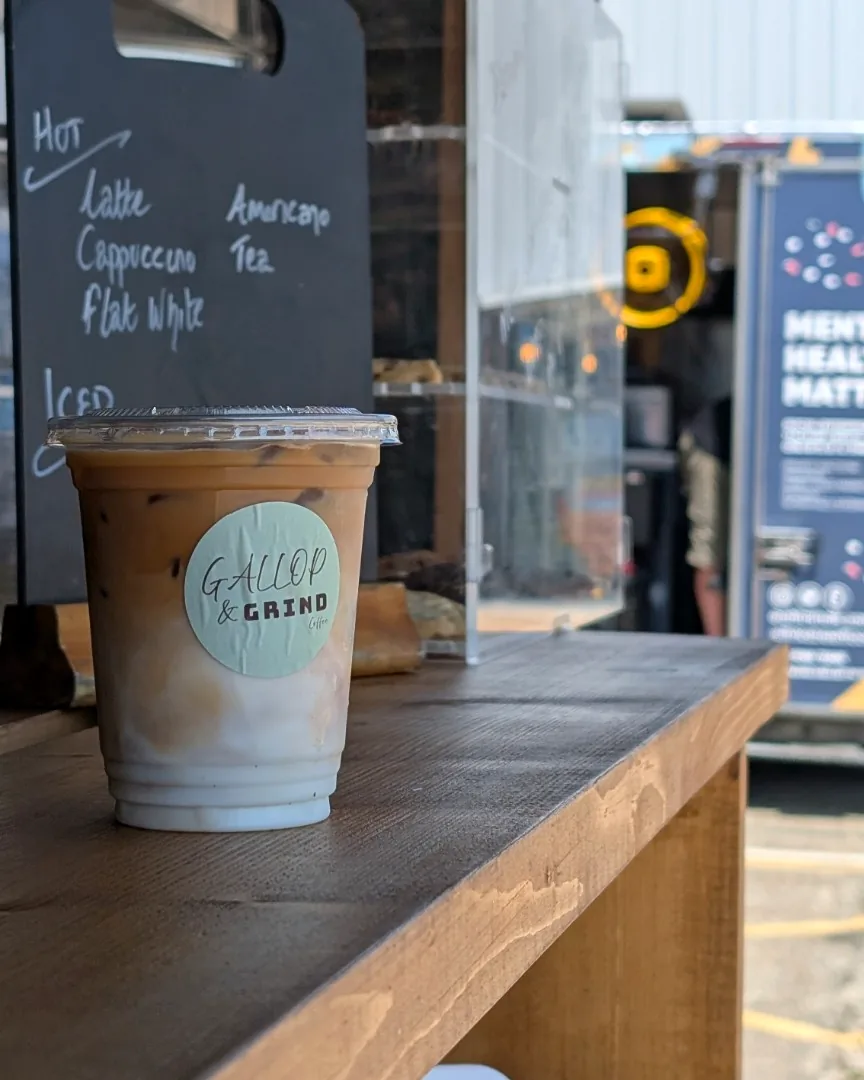
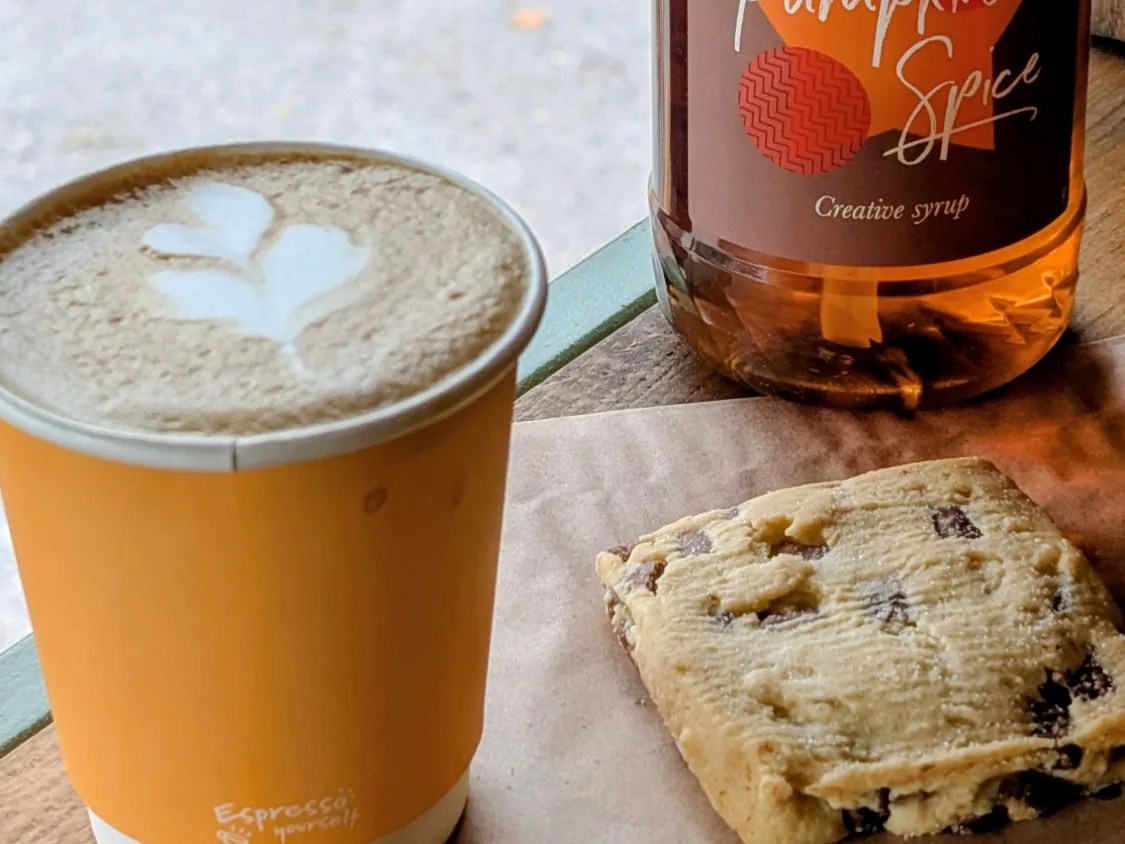
A sample of what we can serve, not a fixed list. The final menu is agreed with you and sized to the service you book.

Espresso-based coffee
- Espresso
- Americano
- Flat white
- Cappuccino
- Latte
- Mocha
- Decaf (any of the above)
Other drinks
- Tea
- Hot chocolate
- Iced coffee
- Seasonal drinks
Milk
- Whole milk
- Oat milk
Pastries, where booked
Available only when arranged in advance as part of the booking.
Prices are quoted per event rather than published, because they depend on numbers, duration and travel.
Allergen statement
Allergen information for the agreed menu is provided in writing before the day, and we will talk through any specific requirement with you at the quotation stage.
Read next
- Coffee at a wedding
How the same menu is served across the ceremony, evening and morning after.
- Coffee for teams and clients
Workplace and company-event service, with organiser deliverables.
- Cups, milk and waste
The practical choices behind what we serve.
Bring proper coffee to your event.
Tell us the date, the place and roughly how many people you expect, and we will come back with availability and a menu built around your day.